Reverse Inquiry
Introduction
Reverse Inquiry (RI) is a foundational technique in Kiloby Inquiries (KI) and repression work. Its purpose is to provoke a somatic response from the unconscious programs and beliefs embedded within our system. These unconscious programs, often formed for safety, influence our thoughts, actions, and emotions without our conscious awareness. By using RI, we can bring these programs to light, understand their purpose, and ultimately release them.
Understanding Unconscious Programs
Our system can hold deep-seated beliefs without our conscious awareness. These beliefs may never surface in the form of active thoughts, yet they manifest in our lives by shaping:
- Our thoughts.
- The words we use.
- The actions we take or avoid.
For example:
You might not consciously think, "I am not good enough," but you may notice persistent struggles in connecting with others or starting a project like a YouTube channel.
This behavior is likely influenced by the unconscious program, "I am not good enough," which remains dormant until triggered by specific situations or stimuli.
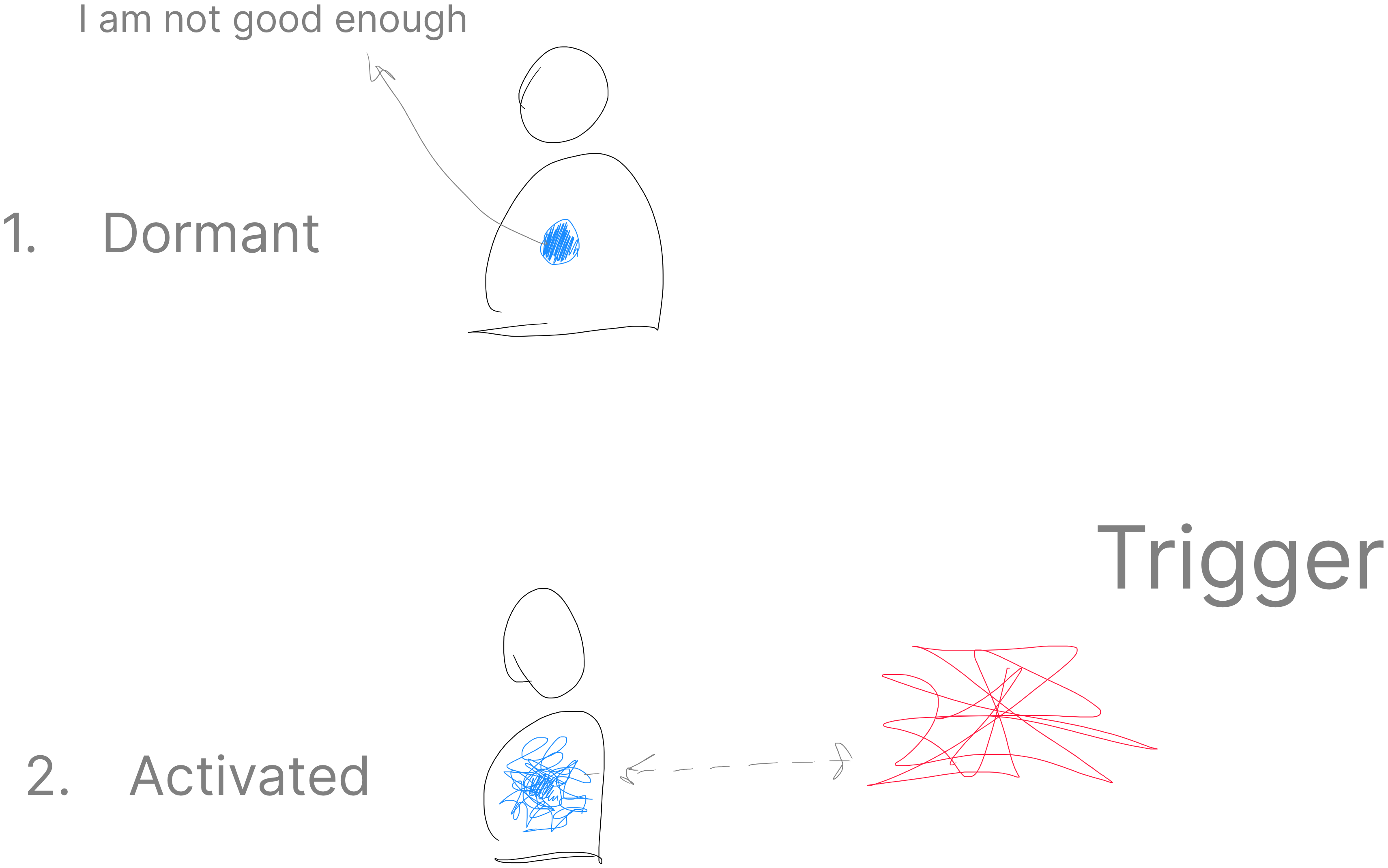
What is a Trigger?
A trigger challenges an unconscious belief or deficiency story. For instance:
- Seeing a successful person might make you feel inferior.
- Attempting something new might provoke resistance or fear.
This triggering mechanism is key to RI because it allows us to identify and interact with these hidden programs.
Reverse Inquiry is a technique that helps uncover hidden beliefs by triggering a physical reaction in the body when you challenge those beliefs with their opposite.
Why Re-trigger Yourself?
By re-triggering yourself voluntarily, you:
- Bring unconscious programs into conscious awareness.
- Gain the ability to examine and understand them.
- Open the door to releasing them by allowing their energy to dissipate naturally.
If the unconscious belief is, "I am not good enough," you would use the RI, "I am good enough," and observe your system’s reaction.
How to Use Reverse Inquiry
-
State the Reverse Inquiry
Clearly and confidently state the reverse of the belief you want to explore, e.g., "I am good enough." -
Step Back and Listen
- Observe your body’s response without judgment.
- Focus on physical sensations or emotions rather than getting caught in thoughts.
-
Interpret the Response
- A somatic reaction often indicates the belief is present in your system.
- Reactions may include intensification of tension, discomfort, or resistance.
- Ask yourself: "Is this reaction a yes or a no?"
- A "no" response is common as the system defends its belief for perceived safety.
-
Repeat if Necessary
- If needed, repeat the RI with pauses in between to observe deeper layers of reaction.
Important Notes on RI Practice
Reverse Inquiry is not about persuading yourself to believe the statement or feel better. Unlike affirmations, RI aims to provoke a reaction to bring hidden beliefs to the surface.
Deliver the RI with 110% conviction. For example: "Of course I’m good enough. I’m the best. I’ve always been the best."
Engage your imagination by picturing significant figures or situations (e.g., parents, authority figures) while stating the RI.
Be Somatically Aware:
Stay grounded in your body and avoid over-identifying with thoughts. Somatic awareness prevents dysregulation and helps you navigate the reaction skillfully.
Allow the Reaction:
When a reaction arises, allow it to exist as it is. While it may feel uncomfortable, this practice builds your capacity to stay present with challenging emotions and sensations.
The Lifespan of Reactions
The reactions triggered by RI are temporary because they are composed of repressed, unconscious energy. This energy has strong inertia to remain hidden, but consistent practice with RI can dissolve it over time.
Why Reverse Inquiry is Powerful
Reverse Inquiry is one of the most powerful tools in repression work and somatic shadow work because it:
- Directly accesses unconscious material.
- Builds self-awareness and emotional resilience.
- Gradually dissolves repressed energy, leading to freedom and clarity.
By regularly practicing RI, you cultivate the ability to observe and release the beliefs that have unconsciously shaped your life.
Summary Checklist for Reverse Inquiry
- State the RI with conviction (e.g., "I am good enough").
- Pause and observe your body’s reaction.
- Interpret the reaction (e.g., somatic discomfort, resistance).
- Allow the reaction to unfold without judgment.
- Repeat as needed to deepen your understanding.
By integrating Reverse Inquiry into your practice, you unlock the potential to uncover and resolve unconscious programs, paving the way for greater presence and emotional freedom.